




Bhagavad Gita: Chapter 2, Verse 27
Bhagavad Gita: Chapter 2, Verse 27

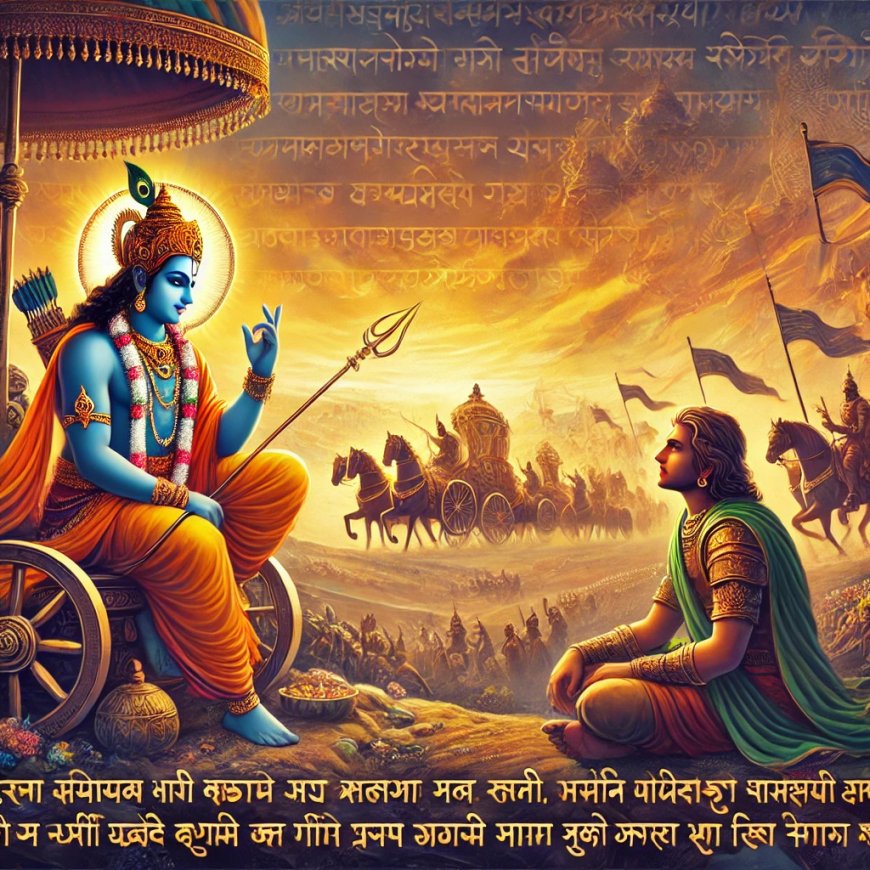
Bhagavad Gita: Chapter 2, Verse 27
जातस्त हि ध्रुवो मृत्युर्ध्रुवं जन्म मृतस्य च।
तस्मादपरिहार्येऽर्थे न त्वं शोचितुमर्हसि ॥
Transliteration:
Jātasya hi dhruvo mṛtyur dhruvaṁ janma mṛtasya ca
Tasmād aparihārye’rthe na tvaṁ śocitum arhasi.
Translation:
Death is certain for the one who is born,
And birth is equally certain for the one who dies.
Therefore, regarding what is unavoidable,
You do not deserve to grieve.
Explanation:
Everyone knows that the sun that rises must inevitably set, and the sun that sets will surely rise again. No one laments over this natural cycle, for it is understood as a fundamental law of nature.
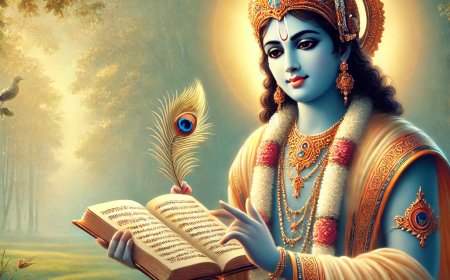
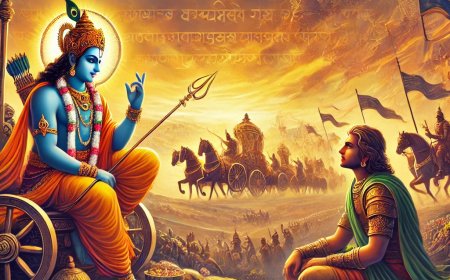
So far, Lord Krishna has explained the eternal nature of the soul. But in this verse, He adopts Arjuna’s own perspective to help him understand. Sometimes, to explain a concept effectively, one must see the situation through the other person’s point of view. Krishna says: “Even if you believe the soul is subject to birth and death, there’s no reason for sorrow. Birth guarantees death, and death ensures birth. This is the cycle of nature.”
The Logic of Change:
The laws of nature demonstrate that change is the only constant. Without change, the world would become static like a lifeless painting.
A child cannot grow into an adult without change.
A fool cannot become wise without transformation.
A sick person cannot become healthy without evolution.
A seed cannot become a tree without change.
Birth and death are also part of this natural process of transformation. Grieving over this inevitable change is futile.
The Wisdom of Acceptance:
The verse encourages us to accept the reality of impermanence:
The rising sun will set; this much you must know.
Where there is death, there will also be birth; accept this universal truth.
What has come must go, no matter how much you resist.
Grieve only when the unexpected happens,
But the unexpected never occurs—
What is destined will always take place.
Thus, there is no room for sorrow in the face of inevitability.
This teaching urges us to embrace the flow of life with wisdom and detachment, understanding that all things come and go as part of a divine order.


What's Your Reaction?