
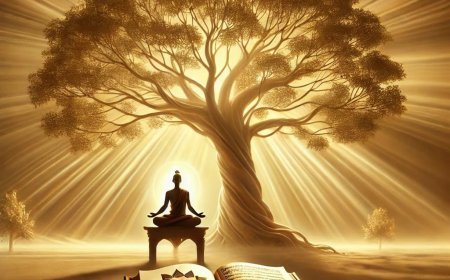




Bhagavad Gita : Chapter 6, Shloka Vere 27
mind control and supreme bliss



प्रशान्तमनसं ह्येनं योगिनं सुखमुत्तमम् ।
उपैति शांतरजसं ब्रह्मभूतमकल्मषम् ॥
The yogi who has attained complete peace of mind, subdued passions, and freed himself from all sins, and who is united with the Absolute Spirit, effortlessly experiences supreme bliss.
Interpretation:
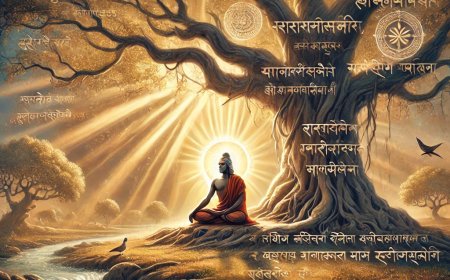
A yogi, through consistent practice, conquers the restlessness of the mind and clears the obstacles on the path of yoga. Having eliminated all sins and impurities, he detaches his intellect from the disturbances of the external world and enters a state of thoughtlessness. In this serene state, he experiences boundless spiritual joy.
Here, the term "शांतरजसं" refers to the state where the rajas guna, or the restless tendency to engage in new actions, has been pacified. Such a yogi no longer finds himself driven by worldly ambitions or the desire to act out of restlessness.
The term "प्रशान्तमनसं" describes one whose mind has become entirely calm and detached from worldly thoughts and mental fluctuations. This yogi transcends the identification with the mind itself and enters a state of stillness and self-realization.
As the yogi aligns himself with the eternal essence of Brahman, the pure consciousness, he naturally attains sattvic joy—peaceful and fulfilling. The word "उपैति" suggests that this joy is not something the yogi has to seek; rather, it comes to him spontaneously and effortlessly, as a natural outcome of his state of being.
Thus, the verse highlights the supreme bliss that arises from a calm mind, a purified heart, and union with the Absolute. This bliss is not momentary but enduring, arising from the yogi's liberation from the cycle of desires and attachments.
What's Your Reaction?