


What is Bhagwadgita About?
What is Bhagwadgita About

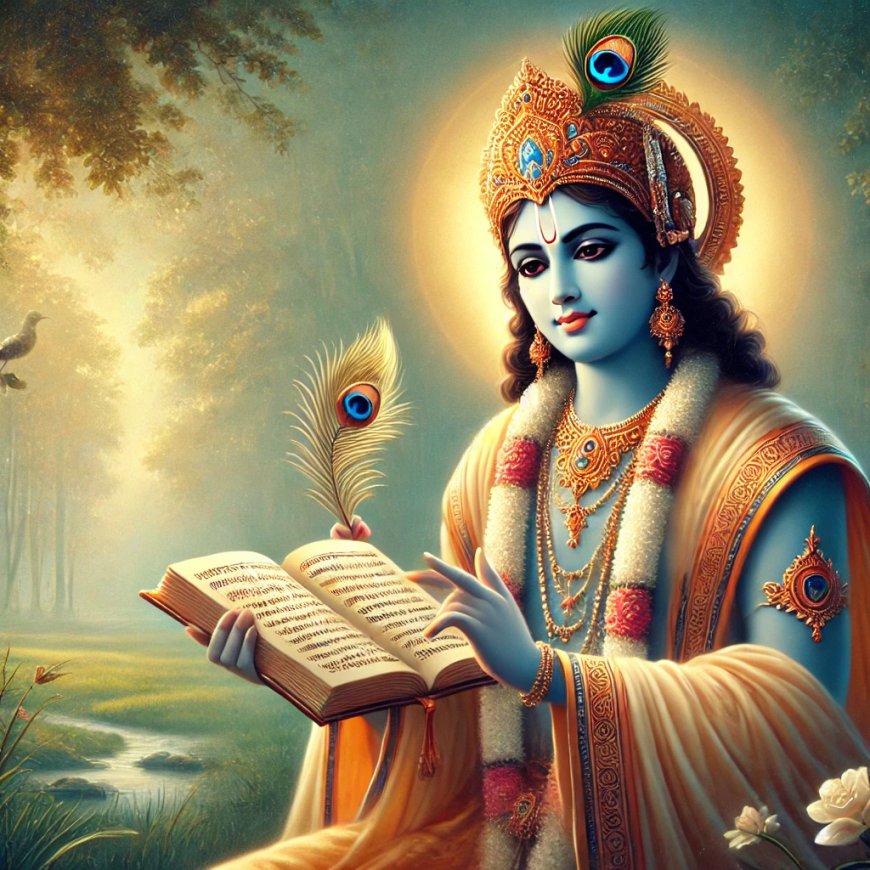
One of India's unique contributions to world epic literature is the Mahabharata. In sheer size, in the vastness of its panorama, in the variety of subjects and situations dealt with, in its reference to the myths, histories, laws, administration, ethics, philosophies, cults and cultural mores, in the interlocking of its narratives within the fold of one consistent story and in its deep allegorical meanings, it has no parallel.


It mirrors the life and soul of the Indian ethos as nothing else does. Rightly has it been acclaimed as the "Book of life" and our sages have affirmed that What is not in it is nowhere else to be found."
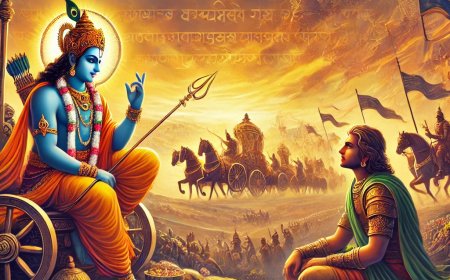
Of the many treasures the Mahabharata contains, nothing is more sublime and profound than the Bhagavadgita. The Maha- bharata with its one lakh verses has the distinction of being the world's longest epic. The Gita containing just seven hundred verses is acclaimed as the world's shortest scripture and huma- nity's Song Celestial.
There is a general impression that the Bhagavadgita is meant only for spiritual aspirants and that it has nothing to do with the secular activities of human beings. But the Gita does not make any distinction between spiritual and temporal, sacred and secular. The Gita enjoys the status of the Scripture Universal, applicable to all persons, in all places and at all times. There is a good deal in the Gita to give guidance to those who want to achieve success in worldly activities, which itself leads on to spiritual realisation ultimately.
No man can escape unceasing activity. Even thinking is a subtle form of action. The goal of everyone is to reach perfect poise by means of perfection in action.
Action by itself is neutral. It is the will or the motive behind the action which makes it good, bad or indifferent. This can be illustrated by simple examples.
Two friends meet after a long time and one greets the other with a slap on the other's back. This may even be painful but it gives the other person immense pleasure because it is a friendly slap. If the same blow is given by an enemy then the situation is completely different. The result is pain, anger and attempt at retaliation.
A child falls seriously ill and requires a surgical operation. The child's father is a famous surgeon but still he will not attempt the operation. As the father of the child, he does not have the mental poise to operate on his own child. He calls in another doctor to do the operation. This illustrates how one's state of mind affects the efficiency of one's action. It is only a person with a detached mind who can function efficiently.
The Bhagavadgita shows the way to train the mind to achieve perfection and excellence in action. It deals with the develop- ment of an individual as an integrated personality.
This is what Swami Chidbhavananda states in his introduction to the Bhagavadgita: "To a person endowed with an efficient hand, a loving heart and a clear head, nothing more remains to be added. He becomes a complete personality verging on Divinity. Perfection marks him for its own.
A harmonious development of the hand, the heart and the head is patent in such a personality. The Gita is the perfect guide to those who aspire to build a perfect personality."
What's Your Reaction?