




Bhagavad Gita: Chapter 6, Verse 23
Bhagavad Gita: Chapter 6, Verse 23

In the present verse, Lord Krishna describes how a Yogi must exercise self-control to reach the ultimate abode of the Supreme.


तं विद्याद् दुःखसंयोगवियोगं योगसञ्ज्ञितम्।
स निश्चयेन योक्तव्यो योगोऽनिर्विण्णचेतसा ॥
Translation:
“That state which is free from the association of misery is known as yoga. This yoga must be practiced with determination and an unwavering mind.”
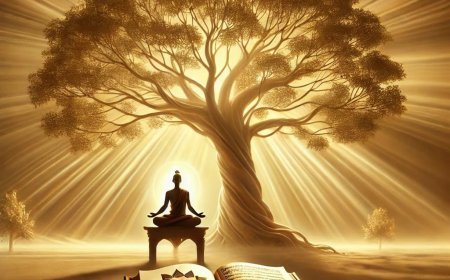
This verse serves as a timeless instruction for seekers of the divine path. Lord Krishna inspires us to approach the practice of yoga with unwavering resolve, patience, and an undistracted mind. The cessation of worldly miseries and the attainment of spiritual bliss are not far for the one who strives resolutely, for yoga is not merely a practice but the key to liberation itself.
Explanation:
The state that transcends all material miseries, arising from worldly associations, is called yoga. This yoga, or union with the divine, must be pursued with steadfastness and a firm resolution, without succumbing to frustration or impatience.
When we identify ourselves with the impermanent nature of the material world, we experience suffering—this is termed duḥkha-saṁyoga (the union with pain).
The moment we detach ourselves from the fleeting world, the natural state of spiritual fulfillment, or yoga, manifests effortlessly. In the eighteenth chapter, Arjuna echoes this realization in verse 73, declaring, “naṣṭo mohaḥ smṛtir labdhā” (“My delusion is destroyed, and I have regained my memory”).
Here, Lord Krishna advises the seeker not to feel dejected when faced with obstacles during practice. Thoughts like “I have been practicing for so long, yet no success,” or “When will I attain the desired goal?” must be resisted. This is the essence of anirviṇṇa-cetasā—to remain undeterred, patient, and enthusiastic.
The seeker must resolve: “No matter how much effort it takes, or how many challenges I face, I shall dedicate this life, this time, and this energy to the attainment of the Supreme. What could be more rewarding than this?”
The path of yoga is an inward journey, one where the Yogi must shield their mind from the distractions posed by the senses, much like protecting oneself from external robbers.
Thoughts that arise during meditation must be consciously checked, like detaining unruly intruders. The Yogi must prevent the mind from wandering towards worldly schemes and, with vigilant focus, discard such distractions with the “ladle of concentration.”
Once the mind achieves stillness, external attractions lose their grip over the Yogi. For this, meditation must be practiced in a serene environment—one devoid of noise, disturbances, or distractions like insects. Such a space enables the seeker to deepen their focus without interrupt
ion.
After resolving to practice yoga, one must experience it firsthand. Through firm determination and patience, the transcendental state that lies beyond the senses can indeed be attained.
What's Your Reaction?